

Waking up at 3 AM can feel strange and deeply emotional for many people. The world is quiet, and your heart feels more alert than usual. Some believe this moment carries a spiritual message from God. It may be a call to pray, reflect, or listen closely. Your soul might be seeking peace, guidance, or answers. This quiet hour often invites deeper spiritual awareness.
For believers, waking at 3 AM is not always a coincidence. It can be a sign of spiritual awakening or inner change. God may be drawing your attention to something important. This time encourages self-reflection and stronger faith. It can also be a moment of comfort and reassurance. Understanding its meaning can bring clarity and spiritual growth.
Understanding the Spiritual Significance of 3 AM Awakenings

Have you ever found yourself wide awake at 3 AM, staring at the ceiling while everyone else sleeps peacefully? You are not alone, and it might not be a coincidence. Throughout history, the early morning hours, particularly 3 AM, have held profound spiritual meaning across different faith traditions. This is not some modern superstition or new age concept; it is deeply rooted in biblical patterns and spiritual realities that believers have experienced for centuries.
The stillness of 3 AM creates a unique environment where divine interruption becomes possible. During these quiet hours, when the world’s noise fades and distractions disappear, God’s whisper becomes remarkably clearer. Your mind is not cluttered with emails, work stress, or the hundred small decisions that fill your waking hours. In this sacred space, the spiritual realm’s thin veil seems more permeable, allowing for deeper connection and revelation.
Think about it, there is something profoundly different about nighttime spiritually. The biblical number three carries significant meaning, representing divine completeness, resurrection power, and the Holy Trinity itself. When you wake at 3 AM, you are entering what many call the prophetic hour, when dreams and visions from God frequently emerge during deep sleep cycles. Historical monastic communities understood this, which is why they practiced early morning intercession at precisely this hour.
Your nighttime awakening might feel inconvenient or frustrating, especially when you have work the next day. But what if these interruptions are actually invitations? What if the reduced mental noise during these hours is intentional, creating the perfect conditions for hearing God’s whisper more clearly? Biblical accounts suggest that angelic visitation sleep experiences often occur at night, when our natural defenses are down and our spirits are more receptive to supernatural encounters.
The pattern is undeniable throughout Scripture. God spoke to Samuel at night. Jacob wrestled with the angel during nighttime hours. Joseph received life-altering dreams while he slept. Paul encountered the Macedonian vision at night, completely redirecting his ministry. These weren’t random occurrences—they were strategic divine appointments during hours when human interference was minimal and spiritual receptivity was maximal.
The Connection Between Angel Number 333 and Waking at 3 AM
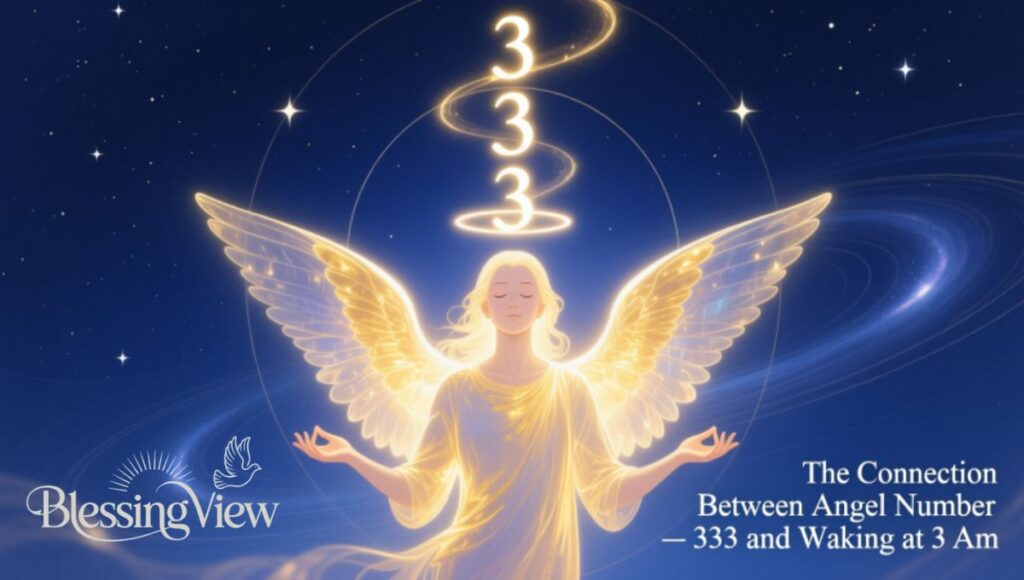
When you consistently wake at exactly 3:00 AM, you’re experiencing what many spiritual observers call the angel number 333 waking pattern. This isn’t about numerology or mysticism—it’s about recognizing God’s intentional use of numbers and patterns throughout Scripture to communicate deeper truths. The triple emphasis on the number three amplifies its already significant spiritual meaning in powerful ways.
The Trinity representation becomes impossible to ignore. Father, Son, and Holy Spirit—three distinct persons, one complete God—working together in your life during these midnight hours. This triple three pattern suggests divine completeness in whatever season you’re navigating. It’s God’s way of saying, “I’m doing a complete work here. Nothing is missing. My timing is perfect.”
Many believers who experience this consistent 3 AM wake-up call report it as a spiritual breakthrough time—a portal moment when heaven seems particularly close and transformation feels tangible. It’s as if the repeated pattern is God’s way of getting your attention, much like He called Samuel’s name three times before the young prophet understood who was speaking. The repetition isn’t a coincidence; it’s emphasis.
This angel number 333 waking pattern also serves as an alignment signal. Your spirit is synchronizing with God’s purposes and timing for your life. You might feel restless or unsettled during these hours, but that restlessness isn’t random—it’s recalibration. Your internal spiritual compass is being adjusted to point more accurately toward your divine destiny and calling.
Those who respond to this call to prayer in the dark consistently report life-changing outcomes. Marriages have been restored during these midnight prayer sessions. Major life decisions have gained clarity. Broken relationships have found healing pathways. Career directions have shifted toward true calling. The common thread? These believers didn’t dismiss their 3 AM awakenings as mere insomnia. They recognized them as divine appointments and showed up with expectant hearts.
The 7 Spiritual Meanings of Waking Up at 3 AM

Your consistent nighttime awakening carries specific spiritual purposes that deserve your attention and response. Understanding these seven meanings helps you discern what God is doing and how to cooperate with His work in your life. Each meaning represents a different dimension of God’s interaction with His children during these sacred hours, and recognizing which one applies to your situation changes everything about how you respond.
| Meaning | Spiritual Purpose | Biblical Foundation | Your Response |
| Divine Wake-Up Call | God is initiating a conversation with you | 1 Samuel 3:1-10 (Samuel hearing God’s voice) | Receiving fresh mercy and grace at midnight |
| Invitation to Intimacy | Deepening your relationship with God | Psalm 46:10, Song of Solomon 5:2 | Enter quiet time prayer and stillness |
| Time for Spiritual Warfare | Engaging in midnight intercession against darkness | Ephesians 6:12, Psalm 91 | Put on spiritual armor and declare Scripture |
| Shift in Your Season | Transition in life season beginning | Genesis 37:5-11, Acts 16:9 (Paul’s vision) | Prepare for change and seek confirmation |
| Prophetic Stirring | Awakening your prophetic gift | Job 33:15-16, Acts 2:17 | Record your dreams and seek interpretation |
| Hour of Mercy and Grace | Receiving fresh mercy and grace in midnight | Lamentations 3:22-23 | Accept His forgiveness and release others |
| Call to Intercession | Intercession for others who need prayer | Romans 8:26-27, 1 Timothy 2:1 | Pray for specific people or situations |
A Divine Wake-Up Call: The Alarm of Heaven

When you wake at 3 AM, it’s often heaven’s intentional divine interruption seeking your undivided attention. Like young Samuel, who heard God’s voice calling repeatedly in the night, this spiritual awakening time represents the Lord initiating sacred conversation when worldly distractions fade. You’ll recognize this divine wake-up call through unusual alertness, spiritual urgency, and specific scriptures or people immediately coming to mind. The proper response involves acknowledging His presence, creating stillness, and declaring “Speak, Lord, I’m listening” just as Samuel did. This holy summons isn’t random restlessness—it’s God pursuing deeper intimacy and preparing you for the next level of faith. Your midnight alertness becomes the classroom where hearing God’s whisper transforms from concept to life-changing reality.
The young prophet Samuel experienced this exact phenomenon when God called him repeatedly at night. Samuel initially didn’t recognize it was the Lord speaking, thinking it was his mentor Eli calling for him. But once Samuel understood the source of the voice, he responded with those powerful words that changed his destiny: “Speak, for your servant is listening.” That posture of readiness and receptivity is exactly what God desires from you during these nighttime encounters.
Signs that this is genuinely a divine wake-up call include feeling unusually alert despite the late hour, experiencing a sense of spiritual urgency or anticipation, and having specific people or situations come immediately to mind. You might also feel drawn to pray or read Scripture rather than frustrated about lost sleep. The pattern often repeats consistently over days or weeks, and there’s a deep knowing in your spirit that this isn’t random or merely physical.
How should you respond to God’s divine interruption? Start by acknowledging His presence aloud: “Lord, I’m here. I’m listening.” Turn off devices and sit in stillness, creating space for Him to speak. Open your Bible and let Him guide you to specific passages. Journal what you sense—impressions, words, or images that come to mind. Ask clarifying questions: “What are you saying? What should I do?” And always thank Him for the invitation, expressing gratitude for His pursuit of you even in the midnight hours.
An Invitation to Intimacy: Meeting God in Stillness
Sometimes your 3 AM awakening isn’t about warfare, urgency, or crisis management. It’s simply an invitation to intimacy with God—a sacred opportunity for uninterrupted connection with your heavenly Father. God desires communion over duty, relationship over ritual, and these midnight hours offer something rare in our distracted world: complete, undivided attention with zero competing demands.
What makes nighttime particularly conducive to meeting God in stillness? There are no phone calls, emails, or responsibilities competing for your attention. Your mind hasn’t yet filled with the day’s worries and to-do lists. Your emotional defenses are down, making you more vulnerable and receptive to His love. Your body is relaxed rather than tense from daily stress, and your spirit is naturally more attuned to God’s presence without the static interference of daily life.
Scripture is filled with examples of people meeting God during hidden hours. Jesus Himself regularly withdrew at night for extended prayer sessions. David wrote many of his most intimate psalms during nighttime meditation, declaring, “When I remember You on my bed, I meditate on You in the night watches.” Jacob wrestled with God throughout the night and emerged transformed with a new name and identity. Mary of Bethany chose to sit at Jesus’ feet while others busied themselves with tasks, and Jesus commended her choice as “the one thing needed.”
Your restlessness at 3 AM might be God gently saying, “Come away with Me. I want your undivided attention. Let’s just be together.” This isn’t about performing prayers or checking off a spiritual to-do list. It’s about simply being present with Him, resting in His presence, listening more than speaking, and letting Him love you without agenda or expectation. This invitation to intimacy with God changes everything about how you experience faith—transforming it from duty into delight, from obligation into relationship.
A Time for Spiritual Warfare: Fighting in the Hidden Hours

While intimacy with God is beautiful, we must also acknowledge a harder reality: the enemy works overtime in the darkness, and your 3 AM awakening might be a summons to engage in warfare in the hidden hours. If you wake feeling anxious, oppressed, fearful, or spiritually heavy—rather than peaceful and expectant—you’re likely facing a spiritual warfare scenario that requires your active, authoritative response.
Why do spiritual attacks intensify at night? Darkness has long been associated with evil activity, as Jesus noted that people loved darkness rather than light because their deeds were evil. Your natural defenses are lowered during sleep, making you more vulnerable. Isolation and silence can amplify fear and negative thoughts. The enemy specifically targets your rest because exhaustion weakens you both physically and spiritually. Nightmares and demonic harassment increase when you’re spiritually vulnerable or under assignment from God that threatens darkness.
How can you recognize when you’re experiencing a spiritual attack rather than a divine invitation? Sudden anxiety or panic without a clear cause, oppressive heaviness or tangible darkness in the room, disturbing dreams or nightmares that jolt you awake, physical symptoms like a racing heart or difficulty breathing, intrusive negative thoughts about yourself or God, feeling of an evil presence or being watched, and unusual sounds or sensations in your environment all point to warfare rather than intimacy.
Your weapons for midnight intercession warfare are powerful and effective. The Name of Jesus carries all authority in heaven and earth—speak it aloud with confidence: “In Jesus’ name, I command you to leave.” The Blood of Jesus provides complete covering and protection—plead it over yourself, your family, and your home. Scripture declarations like Psalm 91, Psalm 23, and Isaiah 54:17 are powerful when spoken aloud. Worship and praise shift the spiritual atmosphere dramatically, just as Paul and Silas experienced a breakthrough at midnight through worship. Binding and loosing exercises your Matthew 18:18 authority to bind evil and loose God’s purposes. And if you have the gift of praying in tongues, use it—the Spirit prays through you with perfect intercession according to Romans 8:26.
A Shift in Your Season: Recognizing Transition in Life Season

Sometimes waking up at 3 AM isn’t about immediate action or crisis response. It’s about preparation for what’s coming. If you’re experiencing persistent nighttime awakening accompanied by unusual restlessness, internal stirring, or a sense of anticipation without clear explanation, you may be entering a significant shift in your season. God is preparing you mentally, emotionally, and spiritually for the transition He’s orchestrating behind the scenes.
Biblical patterns consistently show God using nighttime revelation before major transitions. Joseph received dreams at night, revealing his future leadership before it manifested. Jacob experienced the ladder vision at night before his transformation and name change. Paul received the Macedonian vision at night that completely redirected his entire ministry trajectory. Daniel received prophetic dreams and visions during night seasons that shaped nations. Peter received the rooftop vision that fundamentally changed his understanding of God’s inclusive purposes.
How can you recognize a transition in life season through your spiritual awakening time? Watch for increasing dissatisfaction with current circumstances that previously felt acceptable. New desires emerge that weren’t previously present. Doors close unexpectedly in areas you thought were your future. Unexpected opportunities appear that don’t match your current trajectory. You receive prophetic words or confirmations from multiple trusted sources pointing in a new direction. Internal restlessness persists even though prayer soothes it temporarily. Dreams and visions show you in different contexts, roles, or geographic locations. Old patterns break without conscious effort on your part, and you notice increased spiritual warfare as the enemy tries to prevent your advancement.
The types of seasons God may be shifting you toward include career and calling transitions like new jobs or business launches, relational shifts such as marriage or ending toxic connections, spiritual elevation into deeper intimacy or awakening your prophetic gift, and personal development seasons of health transformation or healing from past trauma. Whatever the specific change, your purpose behind wake-ups is God’s gracious preparation so the transition doesn’t catch you off guard.
A Prophetic Stirring: Awakening Your Prophetic Gift

If you consistently wake at 3 AM with unusual clarity, vivid dreams, symbolic images, or strong impressions about people or situations you have no natural way of knowing, you may be experiencing a prophetic stirring. God is actively awakening your prophetic gift and training you in receiving the hidden message at 3 AM revelations that carry kingdom significance beyond your personal life.
Job 33:15-16 explicitly states God’s method: “In a dream, in a vision of the night, when deep sleep falls upon men, while slumbering on their beds, then He opens the ears of men, and seals their instruction.” God has always used nighttime as a primary channel for prophetic communication because your rational mind is quiet, allowing spiritual perception to dominate. Symbolic language bypasses intellectual barriers that might resist or dismiss the message. The spiritual realm’s thin veil makes revelation clearer, and you’re removed from daily influences that normally cloud discernment.
Characteristics of prophetic awakening include vivid, memorable dreams with clear symbolism or storylines that stay with you long after waking. You experience sudden knowing about situations you have no natural way of knowing. Specific people come strongly to mind with burdens or concerns you can’t explain. Scriptural passages suddenly unlock with new meaning that applies to current situations. Visual imagery appears in your mind’s eye with remarkable detail and clarity. Physical sensations like warmth, tingling, or spiritual weight accompany the revelation, and you notice repeated themes or symbols across multiple nighttime encounters.
The types of prophetic revelation you might receive during these hours include personal direction for your own decisions and path, intercession assignments for specific people or situations requiring intervention for others, revelation knowledge about hidden information regarding people’s struggles, and glimpses of future events that require preparation or prayer coverage. Learning to steward these revelations faithfully requires keeping a detailed dream journal, studying biblical dream symbolism, testing everything against Scripture and through trusted spiritual advisors, and practicing proper prophetic protocol when sharing what you receive.
An Hour of Mercy and Grace: Receiving Fresh Mercy in Midnight

Not every 3 AM awakening demands action or warfare. Sometimes it’s purely about reception—receiving what only God can give. If you wake feeling spiritually dry, burdened by guilt, aware of failures, or crushed by shame, this sacred hour of the morning might be God’s appointed time to pour fresh mercy and grace in the midnight over your weary, wounded soul.
Lamentations 3:22-23 makes this beautiful promise: “Through the Lord’s mercies we are not consumed, because His compassions fail not. They are new every morning; great is Your faithfulness.” What makes this particularly powerful for 3 AM awakening? Because 3 AM is technically the beginning of the new day, the earliest morning hours become the very moment when God’s mercies are being freshly prepared and poured out for you specifically.
Why does God choose nighttime for mercy encounters? Because brokenness surfaces when defenses are down, making you more aware of your genuine need. Pretense fades—you can’t perform or posture in the vulnerable midnight hours. Distractions disappear completely, so nothing competes with encountering God’s transforming love. Desperation intensifies, making you more willing to receive what you absolutely cannot earn. And pride diminishes in the darkness, allowing nighttime humility to open doors to supernatural grace that daytime self-sufficiency keeps closed.
What you might receive at 3 AM includes forgiveness for specific sins God brings to mind, healing from past wounds that daytime defense mechanisms normally protect, renewal of hope for situations that seem impossible, and identity reformation where you encounter who God says you are versus who shame says you are. Come with honest confession, release others who’ve hurt you, receive mercy without trying to earn it, let truth replace the lies you’ve believed about yourself, and worship as your response to His overwhelming grace.
A Call to Intercession: Standing in the Gap for Others
Perhaps the most sacrificial meaning behind your 3 AM wake-up is this: you’re being summoned for intercession for others. Your divine interruption isn’t about your needs, growth, or breakthrough—it’s about standing in the gap for someone else who desperately needs prayer coverage in their crisis moment. This is the high calling of midnight intercession, where your obedience releases heaven’s intervention into someone else’s desperate situation.
Romans 8:26-27 reveals the power available: “Likewise, the Spirit also helps in our weaknesses. For we do not know what we should pray for as we ought, but the Spirit Himself makes intercession for us with groanings which cannot be uttered.” First Timothy 2:1 commands this priority: “Therefore I exhort first of all that supplications, prayers, intercessions, and giving of thanks be made for all men.”
How do you recognize an intercessory assignment versus other wake-up reasons? A specific person’s name or face comes immediately to mind upon waking. You feel burden or heaviness for someone or a situation in your spirit. There’s an unexplained urgency to pray right now, not later in the morning. You experience emotional resonance with someone else’s pain, fear, or struggle that clearly isn’t your own. A geographic location is strongly impressed on your mind. Scriptural promises come to mind that apply to someone else’s situation, not yours. The awakening repeats until you engage in prayer, and you sense spiritual battle on behalf of another person with no personal benefit or obvious connection to your own life.
The strategic importance of midnight intercession cannot be overstated. Your 3 AM might be someone else’s crisis moment in another time zone, creating a prayer offered in their moment of greatest need. Warfare in the hidden hours carries particular spiritual power because the enemy doesn’t expect prayer coverage at 3 AM. Nighttime removes distractions, allowing deeper prayer, and your spirit can pray beyond your natural understanding through groanings and wordless intercession. You’re partnering directly with the Holy Spirit in Spirit-led midnight awakening that ensures you’re praying exactly God’s will.
Additional Insights: Maximizing Your 3 AM Encounters

If waking at 3 AM becomes a regular pattern in your life, you need practical strategies to maintain physical health alongside spiritual responsiveness. This isn’t about choosing between body and spirit—God cares about both, and sustainable spiritual practice honors your physical limitations while remaining obedient to divine appointments.
Sleep hygiene considerations matter significantly. Go to bed earlier to ensure you’re still getting adequate total sleep, as most adults need seven to nine hours. Consider afternoon naps if possible to compensate for interrupted nighttime sleep. Cut off caffeine by early afternoon to support returning to sleep after your prayer time ends. Communicate with your household so family members understand your schedule and can support rather than question it. Build in weekend flexibility to catch up on sleep if needed, and don’t hesitate to seek medical consultation if exhaustion becomes problematic—sometimes sleep disorders need treatment alongside spiritual practices.
Spiritual sustainability requires wisdom and grace. Don’t force spirituality on every awakening—sometimes you’re genuinely just awake and that’s okay. Extend grace to yourself on nights when you’re too exhausted to engage meaningfully. Understand that response can vary greatly; sometimes you’ll pray for ten minutes, other times for an hour, and both are valid. Recognize that intensity may vary based on life circumstances and seasons. Seek community support from others who understand this calling so you don’t feel isolated or strange. Most importantly, develop discernment about when your awakening is genuinely spiritual versus when natural explanations apply.
When is it not a spiritual awakening? Sleep disorders like sleep apnea, insomnia, or restless leg syndrome should be ruled out medically. Medication side effects or caffeine sensitivity can disrupt sleep patterns. Stress, anxiety, or unprocessed trauma frequently causes nighttime awakening. Hormonal changes during pregnancy, menopause, or other life transitions affect sleep. In these cases, addressing the physical or emotional root alongside spiritual practices creates the healthiest approach.
Biblical Foundations: How Scripture Validates Nighttime Divine Encounters

If you’ve ever wondered whether nighttime spiritual experiences are genuinely biblical or just imagination, Scripture provides abundant validation. God has consistently used the night seasons throughout redemptive history to speak, guide, warn, and transform His people. Understanding these biblical foundations strengthens your confidence when responding to your own 3 AM encounters.
The Old Testament is filled with significant nighttime encounters. Abraham received the covenant promise under the stars at night when God told him to count them if he could, prophesying his descendants would be equally numerous. Jacob’s ladder vision came at night at Bethel, revealing heaven’s connection to earth and God’s promises to him personally. Joseph’s dreams that revealed his future came during sleep, though his brothers initially mocked them. Moses encountered the burning bush during his nighttime watch over the sheep. Samuel heard God’s voice calling him repeatedly at night as a young boy in the temple. Solomon asked for wisdom during a nighttime divine encounter at Gibeon. Job received understanding about suffering through nighttime visions. Isaiah, Jeremiah, Ezekiel, and Daniel all received major prophetic revelations during nighttime hours or in dreams.
The New Testament continues this pattern with equal power. Joseph, Mary’s husband, received angelic direction about Jesus through dreams—first to take Mary as his wife, then to flee to Egypt, and later to return to Israel. The wise men were warned in a dream not to return to Herod. Peter was released from prison by an angel at night. Paul received the Macedonian call through a nighttime vision that redirected his entire ministry from Asia to Europe. John received the entire book of Revelation during a prophetic experience on the Lord’s Day. Jesus Himself spent entire nights in prayer before major decisions and regularly withdrew at night to commune with the Father.
The theological foundation is clear: darkness doesn’t hinder God’s communication—sometimes it enhances it by removing distractions. Sleep doesn’t limit God’s access to His children—He speaks to our spirits even when our conscious minds rest. Nighttime is a biblically validated space for divine encounter, instruction, warning, comfort, and commissioning. Your 3 AM awakening stands in a long tradition of God’s people receiving midnight revelations that changed not just their lives, but often the course of history itself.
Creating Your Personal 3 AM Prayer Response Plan
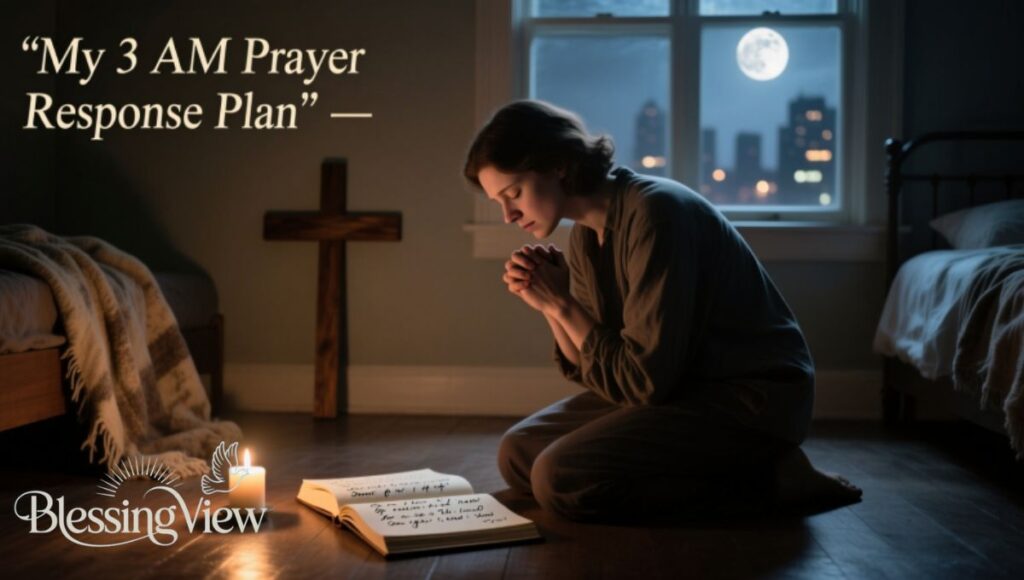
Now that you understand the spiritual significance of these awakenings, you need a practical plan for responding effectively. Random, unprepared reactions rarely maximize these divine appointments. Instead, creating a personal response plan ensures you’re ready whenever God interrupts your sleep with purpose and intention.
Preparation Before Sleep
Start by preparing your physical space before going to bed. Keep a journal and pen on your nightstand so you can immediately capture anything God speaks. Have your Bible readily accessible, whether physical or on a device you can quickly access without bright light disrupting others. Consider keeping a small flashlight or book light available. Some people find having worship music queued and ready helpful for shifting into a prayerful atmosphere quickly. Keep water nearby since you’ll likely be awake for a while. These simple preparations eliminate the fumbling and searching that can distract from the spiritual encounter itself.
Set your heart posture before sleep with a simple prayer: “Lord, if You wake me tonight, I’m available. Help me recognize Your voice and respond with obedience.” This pre-sleep prayer shifts your subconscious awareness and creates spiritual readiness even while you sleep.
Immediate Response Upon Waking
When you wake at 3 AM, resist the immediate urge to check your phone or worry about lost sleep. Instead, take a deep breath and acknowledge God’s presence: “Lord, I’m awake. Are you calling me?” Wait in silence for a moment. You’ll often sense whether this is a divine appointment or just physical restlessness.
If you sense this is spiritual, get out of bed and move to your prayer space. Staying in bed often leads to falling back asleep and missing the encounter. Moving to a chair or designated prayer spot signals to your body and spirit that you’re engaging intentionally. Grab your journal and Bible, wrap yourself in a blanket if it’s cold, and create a posture of readiness and receptivity.
Discernment Process
Take a few minutes to discern what type of encounter this is. Ask yourself these questions: Do I feel peaceful or anxious? Is a specific person coming to mind? Do I sense warfare or intimacy? Are scriptures pressing into my awareness? Do I feel burden for intercession or invitation to worship? Is there urgency or a gentle invitation? Am I receiving instruction or simply His presence?
Your answers guide your response. Warfare requires different engagement than intimacy. Intercession differs from personal instruction. Prophetic revelation needs careful recording, while mercy encounters need receptive stillness. Discerning the type of encounter prevents treating every awakening identically when God’s purposes vary significantly.
Specific Response Strategies
For divine wake-up calls with instruction, open your Bible and ask Him to guide you to specific passages. Write down everything you sense, see, or hear in your journal without editing. Ask clarifying questions about the application and timing. Thank Him for speaking and commit to obedience.
For intimacy invitations, put away agendas and simply sit in His presence. Practice listening prayer—more silence than words. Read Scripture devotionally rather than informationally, letting Him speak through the text. Worship softly through song or spoken adoration. Let Him love you without needing to accomplish anything.
For spiritual warfare, immediately put on spiritual armor verbally. Speak Scripture declarations aloud with authority. Plead the blood of Jesus over yourself and your household. Worship aggressively to shift the atmosphere. Bind enemy activity and loose God’s purposes. Continue until you sense a breakthrough and the oppression lifts.
For intercessory assignments, write down who or what comes to mind immediately. Pray for protection, blessing, and breakthrough over that person or situation. Ask the Holy Spirit to guide your prayers since you likely don’t know the details. Continue until the burden lifts or peace comes. Follow up later if appropriate to confirm the timing of their need.
For prophetic stirrings, record every detail of dreams or visions immediately before they fade. Note symbols, colors, emotions, people, and overall themes. Don’t interpret immediately—just capture accurately. Later, ask the Holy Spirit for interpretation and test everything against Scripture. Share wisely and only when led.
For mercy encounters, come with an honest confession about whatever He’s highlighting. Receive His forgiveness fully without trying to earn it. Let Him speak truth over the lies you’ve believed. Release others you’ve held bitterness toward. Worship as your response to His overwhelming grace.
Closing the Encounter
When you sense the encounter concluding, perhaps the burden lifts, peace settles, or drowsiness returns, thank God specifically for the encounter. Review what you wrote in your journal. Speak any commitments to obedience aloud. Ask if there’s anything else He wants to communicate. Then bless the remainder of your sleep and return to bed with gratitude.
Follow-Up the Next Day
In the morning, review your journal entries with a fresh perspective. Research any unfamiliar scriptures or symbols. If you received intercession assignments, follow up with those people if appropriate. If you received personal instruction, take concrete first steps toward obedience. Share significant encounters with trusted spiritual advisors for confirmation and accountability. Watch for confirmations throughout the day that validate what you received.
Building Consistency
Track patterns in a separate journal section, noting dates, types of encounters, and outcomes. This helps you recognize God’s specific ways of communicating with you personally. Evaluate monthly whether your responses are effective or need adjustment. Celebrate testimonies when prayers are answered, or instructions prove accurate. Stay connected with other believers who understand this calling. Adjust your plan as you grow in discernment and maturity.
Your 3 AM awakening doesn’t have to feel chaotic or confusing. With a solid response plan, these midnight appointments become some of the richest, most transformative moments in your entire spiritual journey. The key is preparation for meeting opportunities when heaven interrupts your sleep with divine purpose.
Frequently Asked Questions
Why do I keep waking up at 3 AM?
Waking up at 3 AM may be linked to spiritual awareness, stress, or your body’s natural sleep cycle.
Is waking up at 3 AM a spiritual sign?
Many people believe waking at this time is a spiritual call to pray, reflect, or seek guidance from God.
What does God mean by waking me up at 3 AM?
Some believe God may be inviting you to pray, listen, or focus on an important life matter.
Is waking up at 3 AM connected to anxiety?
Yes, anxiety or overthinking can cause the mind to become active during early morning hours.
Does waking up at 3 AM mean spiritual awakening?
For some, it represents spiritual growth, inner transformation, or increased sensitivity to faith.
Can stress cause waking up at 3 AM?
High stress levels can disturb sleep and lead to waking up at the same time each night.
Should I pray when I wake up at 3 AM?
Many believers find peace and clarity through prayer during this quiet and reflective hour.
Is waking up at 3 AM normal?
Yes, it is common and can happen due to sleep patterns, lifestyle habits, or health factors.
What should I do after waking up at 3 AM?
Try calming your mind with prayer, deep breathing, or positive reflection before sleeping again.
Does waking up at 3 AM have a biblical meaning?
Some interpret it as a time for spiritual connection, though meanings can vary by belief.
Conclusion
Waking up at 3 AM can be a gentle moment of spiritual awareness. It may be a quiet reminder to pause and listen to your heart. God could be calling you toward prayer or reflection. This time invites peace, faith, and inner understanding. It is not always something to fear or ignore. Instead, it can be a chance to grow spiritually.
Every experience of waking at 3 AM is personal and meaningful. It may reflect stress, faith, or a deeper spiritual message. Listening calmly can bring comfort and clarity. Trust that God speaks in peaceful and gentle ways. Use this moment to strengthen your connection with Him. Faith and understanding can guide you back to rest.

Jack William Ki has 4 years of experience writing blogs on blessings and prayers. Passionate about inspiring others, he now contributes his insights and devotion to BlessingView.com, sharing positivity and spiritual guidance